Slip and fall lawyer services at Centobin Law Office in Calgary help injured individuals pursue compensation when a property owner’s negligence causes a fall. Alberta’s Occupiers’ Liability Act (RSA 2000, c O-4) requires property occupiers to keep premises reasonably safe for visitors. Whether your fall occurred on an icy sidewalk, in a grocery store, at a construction site, or inside a residential building, a personal injury lawyer at Centobin Law Office evaluates your claim, identifies all liable parties, and fights for the full value of your recovery.
When property occupiers fail to keep premises reasonably safe, you have the right to seek damages for medical expenses, lost income, pain and suffering, and future care costs.
Appearing regularly in Calgary Provincial Court, the Court of King's Bench of Alberta, and the Alberta Court of Appeal.
Confidential. No obligation. 15 minutes free. Urgent criminal matters answered same day.
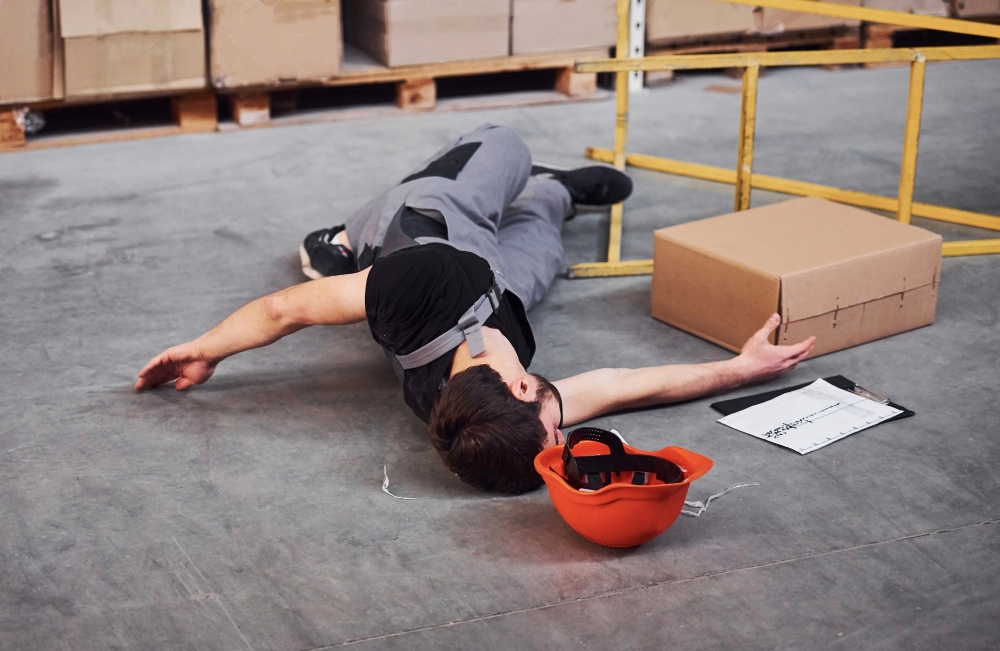
Slip-and-fall accidents in Calgary occur across a wide range of settings.
Still, certain hazards occur with significantly higher frequency due to the city’s winter climate, commercial density, and residential building stock.
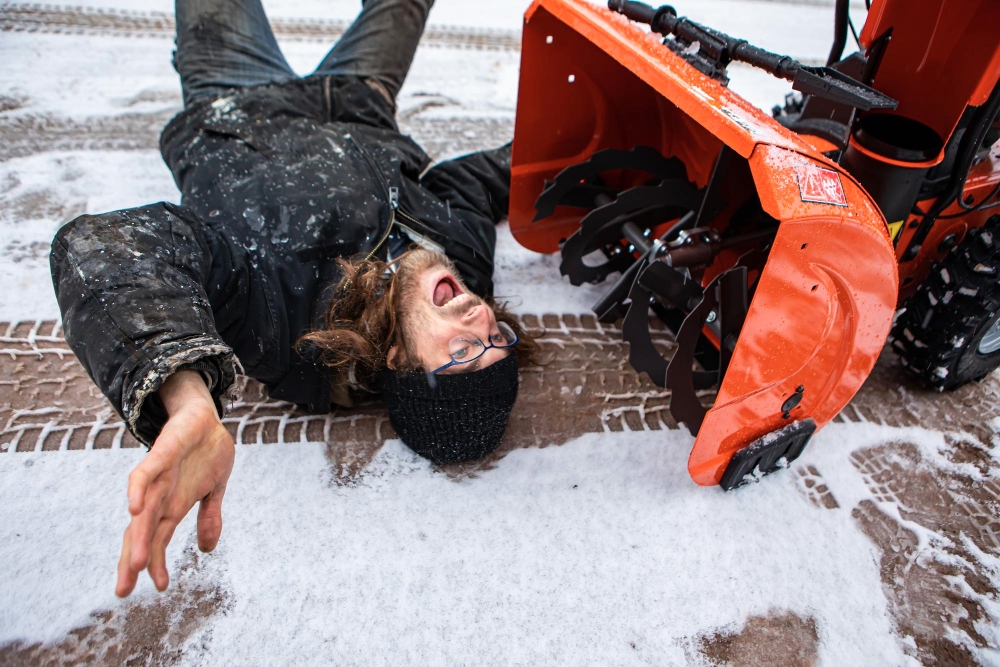
Winter ice and snow are the leading cause of slip-and-fall injuries in Calgary. Alberta records among the highest rates of ice-related fall injuries in Canada, with the risk period extending from October through April. Under Calgary Bylaw 20M88 (Streets Bylaw), property owners must clear snow and ice from public sidewalks adjacent to their property within 24 hours after snowfall ends, down to bare surface for a minimum width of 1.5 metres.
Common winter hazards that lead to slip-and-fall claims in Calgary include black ice on unsalted walkways, refrozen meltwater from improperly maintained eavestroughs, compacted snow on apartment building stairwells, inadequately treated parking lot surfaces, and ice buildup on commercial loading docks. When a property occupier fails to salt, sand, or shovel within a reasonable timeframe, they may be found negligent under the Occupiers’ Liability Act.
Commercial property slip-and-fall hazards in Calgary include wet floors from tracked-in snow or spills that are not promptly cleaned, recently mopped surfaces without visible warning signage, loose floor mats at building entrances, damaged or uneven flooring in retail aisles, and poorly lit stairwells in office towers and shopping centres.
Retail and commercial property occupiers in Alberta have a heightened duty to inspect their premises for hazards regularly. A grocery store that fails to address a spill within a reasonable time, or a shopping mall that does not place anti-slip mats at entrances during the winter months, may face premises liability claims when customers fall and sustain injuries.
Residential slip-and-fall hazards in Calgary include icy steps and walkways on private property, poorly maintained common areas in condominium and apartment buildings, broken or missing handrails on stairways, loose carpet or uneven flooring in shared hallways, and inadequate lighting in underground parking structures.
In multi-unit residential buildings, liability may fall on the landlord, the property management company, or the condominium corporation, depending on who had responsibility for maintaining the area where the fall occurred. Alberta courts examine maintenance contracts, inspection schedules, and complaint records to determine whether the occupier took reasonable steps to prevent the hazard.
Slip and fall injuries range from minor soft tissue damage to catastrophic, life-altering conditions. The severity of a fall injury depends on the surface, the angle of impact, the height of the fall, and the individual’s age and pre-existing health. Under Alberta law, the “thin skull rule” means a defendant takes the plaintiff as they find them — a fall that aggravates a pre-existing condition can still result in full compensation.
The most common injuries a slip and fall lawyer at Centobin Law Office in Calgary handles include:
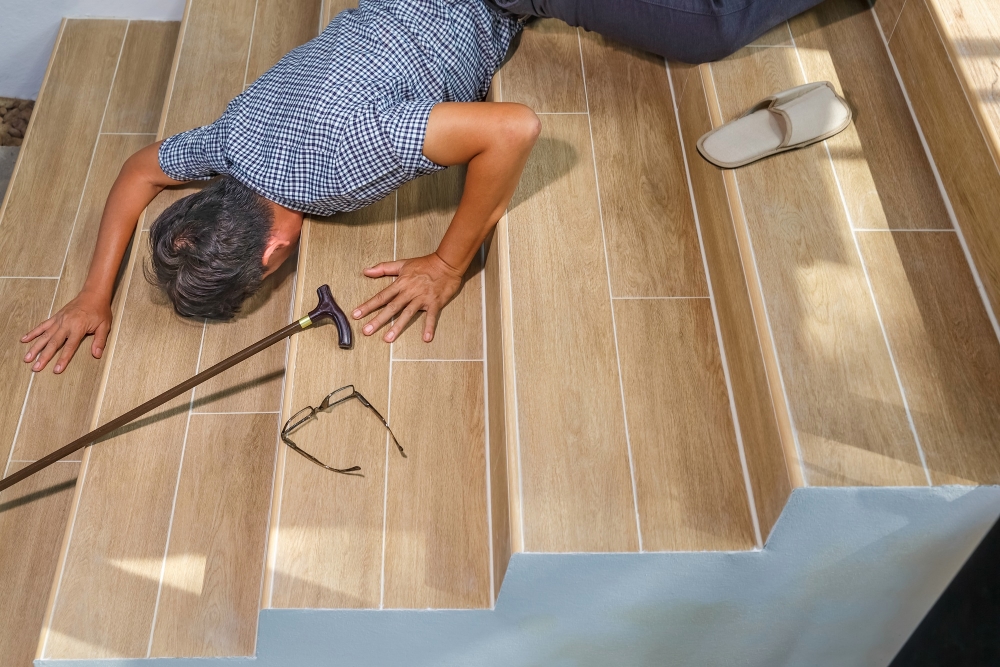
Do not dismiss a fall as minor: many serious conditions — including concussions, internal bleeding, and soft tissue tears — produce delayed symptoms that worsen over days or weeks. Seek medical attention immediately after any fall, even if you feel fine at the scene.
Minor injuries — soft tissue strains, sprains, and bruises that resolve within weeks to months with conservative treatment — typically settle between $10,000 and $50,000.
Moderate injuries requiring surgery or extended rehabilitation — fractures requiring surgical repair, torn ligaments, concussions with lingering symptoms — range from $50,000 to $250,000.
Severe and catastrophic injuries — traumatic brain injuries with permanent cognitive impairment, spinal cord injuries, multiple fractures with long-term disability — can exceed $500,000.
Several factors increase the value of a slip and fall claim: clear evidence that the occupier knew about the hazard and failed to act, injuries that are well-documented from the date of the fall, and low or zero contributory negligence. Factors that decrease value include limited medical documentation, pre-existing injuries that complicate causation, high contributory negligence, and delayed medical treatment.
(403) 249-1733The Occupiers’ Liability Act (RSA 2000, c O-4) is the primary statute governing slip-and-fall claims in Alberta. This legislation replaced the older common-law categories of invitee, licensee, and trespasser with a single, unified standard of care that applies to anyone who lawfully enters premises.
Who qualifies as an “occupier”? Under Section 1 of the Act, an “occupier” is any person who is in physical possession of premises, or who has responsibility for and control over the condition of premises, the activities conducted on those premises, or the persons allowed to enter. A single property can have multiple occupiers simultaneously.
The duty of care standard. Section 5 of the Act requires an occupier to take “such care as in all the circumstances of the case is reasonable” to ensure that a visitor is reasonably safe while using the premises. The standard is one of reasonableness, not perfection. A property occupier is not liable simply because ice formed on a sidewalk during a Calgary winter storm — liability arises when the occupier knew or ought to have known about the hazard and failed to take reasonable steps to address it. Section 6 addresses the occupier’s duty to trespassers, requiring only that the occupier not create a danger with the deliberate intent to harm or act with reckless disregard for their safety.
Determining liability in a slip-and-fall case requires identifying who had control over the premises and the specific hazard that caused the fall. Alberta’s Occupiers’ Liability Act does not limit liability to property owners alone — anyone who exercises control over the condition of the premises can be held responsible. A single fall may involve multiple liable parties.
| Category | Who Is Typically Liable | Key Point |
|---|---|---|
| Homeowner & Residential | Homeowners | Must clear adjacent public sidewalks within 24 hours under Bylaw 20M88 |
| Commercial & Business | Business operator, property owner, management company, or maintenance contractor | Heightened duty to inspect premises and promptly address hazards |
| Municipal & Government | The City of Calgary and other Alberta municipalities | Claims subject to strict notice requirements — as few as 21 days |
Homeowner & Residential Liability: Homeowners in Calgary are liable for slip-and-fall injuries when they fail to maintain reasonably safe conditions on their property. Under Calgary Bylaw 20M88, homeowners must clear snow and ice from adjacent public sidewalks within 24 hours after snowfall ends. Most homeowners carry homeowner’s insurance that includes personal liability coverage.
Commercial Property & Business Liability: Commercial property occupiers in Calgary owe a heightened practical duty to inspect their premises and promptly address hazards. Liability for a commercial slip-and-fall may extend to the business operator, the property owner, the property management company, and any maintenance contractor responsible for the area.
Municipal & Government Liability: The City of Calgary and other Alberta municipalities can be held liable for slip-and-fall injuries on public property. However, municipal slip-and-fall claims are subject to strict notice requirements under the Municipal Government Act — as few as 21 days from the date of the incident.
Contributory negligence in Alberta slip and fall cases means that if you share partial fault for your fall, your compensation is reduced proportionally to your share of responsibility, but is not eliminated. Alberta’s Contributory Negligence Act (RSA 2000, c C-27) allows courts to apportion fault between the injured person and the property occupier. For example, if you fell on an icy parking lot that the property owner failed to salt, but you were wearing smooth-soled dress shoes despite obvious winter conditions, a court might assign 20% fault to you and 80% fault to the occupier. Common factors that may contribute to a finding of contributory negligence include:
A slip and fall lawyer at Centobin Law Office in Calgary anticipates contributory negligence defences and gathers evidence to minimize fault attribution — demonstrating that the hazard was not visible, that warning signs were absent or inadequate, or that the injured person’s footwear was reasonable for the conditions.
Compensation for a slip-and-fall injury in Alberta may include the following:
A slip and fall lawyer in Calgary is essential when your injuries require ongoing treatment, when multiple parties may share liability, when your fall occurred on municipal property with strict notice deadlines, when the insurance company disputes your claim, or when contributory negligence is raised as a defence.
Your injuries are serious or worsening. Fractures, head injuries, back injuries, and conditions requiring surgery involve complex damage calculations that insurance adjusters consistently undervalue without legal pressure.
Your fall occurred on municipal property. Claims against the City of Calgary require strict written notice — in some cases, within 21 days. Missing this deadline forfeits your right to compensation permanently.
Multiple parties may be liable. When a fall involves a tenant, a landlord, a property management company, and a maintenance contractor, identifying all liable parties requires legal investigation.
The insurance company is delaying or denying. Insurers use recorded statements, independent medical examinations, and surveillance to reduce or deny claims.
Contributory negligence is being alleged. When the occupier argues that you were partially at fault, a lawyer gathers evidence to minimize the fault assigned to you.
You may be able to handle a claim without a lawyer when your injuries are very minor and the liable party’s insurance company makes a fair offer quickly. However, accepting an early settlement without legal review risks leaving significant compensation unclaimed if symptoms worsen later.
Discuss Your ClaimAfter a slip and fall in Calgary, take these steps immediately. Evidence in slip and fall cases — especially ice, water, and temporary hazards — can disappear within hours.
Your health comes first. Even if your injuries seem minor, see a doctor as soon as possible. Many serious conditions produce delayed symptoms. Medical records created promptly after the fall become essential evidence in your claim.
Use your phone to capture the hazard that caused your fall — ice, water, uneven pavement, missing handrails, or absent warning signs. Take wide shots showing the surrounding area and close-up images of the specific hazard. Timestamp your photos.
If anyone saw your fall, record their full name, phone number, and email address. Eyewitness accounts can be decisive in establishing that the hazard existed and that the occupier failed to address it.
Notify the property owner, building manager, or store manager about the fall. Ask them to create a written incident report and request a copy. If the fall occurred on municipal property, file a report with the City of Calgary, remembering that municipal claims may require written notice within as few as 21 days.
Keep the shoes and clothing you were wearing at the time of the fall. Do not wash or repair them. These items may become evidence if contributory negligence is raised as a defence.
Before providing a recorded statement to any insurance company, speak with the slip and fall legal team at Centobin Law Office. Insurance adjusters are trained to minimize payouts.
A slip and fall lawyer at Centobin Law Office in Calgary provides end-to-end representation from the initial free consultation through settlement negotiation or trial at the Court of King’s Bench of Alberta.
A slip and fall claim in Alberta is a personal injury action brought against a property occupier who failed to maintain reasonably safe premises, resulting in a visitor slipping, tripping, or falling and sustaining injuries. These claims are governed primarily by Alberta’s Occupiers’ Liability Act (RSA 2000, c O-4).
Slip and fall claims are a category of premises liability — the legal principle that whoever controls a property bears responsibility for hazards on that property. A slip occurs when your foot loses traction — typically on ice, water, or a polished surface. A trip occurs when your foot catches on an unexpected change in elevation. Both fall under premises liability, and both are actionable when the property occupier’s negligence contributed to the hazard.
Calgary’s climate creates a particularly high-risk environment for slip-and-fall injuries. Alberta has one of the highest slip-and-fall injury rates in Canada, driven largely by winter conditions that persist from October through April.
Under Alberta’s Limitations Act (RSA 2000, c L-12), the general limitation period for a slip and fall claim is two years from the date you knew or ought to have known that another party’s negligence caused your injury. The two-year limitation period begins to run from the date of “discoverability” — in most slip-and-fall cases, this is the date of the fall itself. Alberta’s limitation rules do not have a “pause and restart” feature. Once the limitation period expires, the court will dismiss your claim regardless of the merits.
Municipal claims have shorter deadlines: if your slip and fall occurred on City of Calgary property — including public sidewalks, parks, transit facilities, or city-maintained roads — you may be required to provide written notice to the municipality within 21 days of the incident under the Municipal Government Act (RSA 2000, c M-26). Failing to provide this notice can permanently bar your claim.
Free Case Evaluation: Your case begins with a no-obligation consultation where a personal injury lawyer reviews the circumstances of your fall, assesses the strength of your claim under the Occupiers’ Liability Act, and explains your legal options clearly.
Evidence Preservation and Investigation: Centobin Law Office moves quickly to preserve time-sensitive evidence — photographs, surveillance footage, maintenance logs, weather records, and incident reports — and identifies every liable party.
Medical Documentation Coordination: The legal team works with your physicians, physiotherapists, and specialists to ensure that your injuries are thoroughly documented, retaining independent medical experts where necessary.
Insurance Negotiation: Centobin Law Office handles all communication with insurance adjusters and negotiates from a position of fully documented evidence, countering early lowball offers.
Litigation and Trial: If the insurance company refuses to offer fair compensation, Centobin Law Office files a Statement of Claim in the Court of King’s Bench of Alberta and prepares your case for trial.
Contingency Fee Basis: Centobin Law Office handles slip and fall cases on a contingency fee basis — you pay no legal fees unless the firm recovers compensation for you.

The legal team understands the Occupiers’ Liability Act, the Limitations Act, the Contributory Negligence Act, and the Municipal Government Act in the context of Calgary slip-and-fall cases.
Book a confidential consultationThe firm does not accept lowball settlement offers. Centobin Law Office prepares every case as if it will go to trial, which positions clients for maximum recovery at the negotiation table.
Book a confidential consultationCentobin Law Office operates on a contingency-fee basis for slip-and-fall claims. You pay nothing up front and owe no legal fees unless your case results in compensation.
Book a confidential consultationLocated at 5819 2 St SW, Calgary, AB T2H 0H2, Centobin Law Office is accessible to clients across Calgary and southern Alberta.
Book a confidential consultationYour questions are answered promptly. Centobin Law Office keeps you informed at every stage of your claim and explains each development in plain language.
Book a confidential consultationUnder Alberta’s Limitations Act (RSA 2000, c L-12), the general limitation period is two years from the date you knew or ought to have known that your injury resulted from another party’s negligence. Claims against municipalities may require written notice within 21 days of the incident under the Municipal Government Act.
Compensation may include pain and suffering, past and future loss of income, medical and rehabilitation expenses, future care costs, out-of-pocket expenses, loss of housekeeping capacity, and loss of enjoyment of life.
Under Alberta’s Contributory Negligence Act (RSA 2000, c C-27), if you are found partially at fault for your fall, your compensation is reduced by your percentage of responsibility but is not eliminated. For example, if a court assigns 25% fault to you, you recover 75% of the total assessed damages.
Seek medical attention, photograph the hazard and surrounding area, collect witness names and contact information, report the incident to the property owner or manager, preserve your footwear and clothing, and contact a slip and fall lawyer at Centobin Law Office before providing any statement to an insurance company.
The strength of your claim depends on the clarity of the hazard evidence, the occupier’s knowledge of the dangerous condition, the quality of your medical documentation, the severity of your injuries, and the degree of contributory negligence.
Liability depends on who controls the premises. Under Calgary Bylaw 20M88, property owners must clear snow and ice from adjacent public sidewalks within 24 hours after snowfall. Under the Occupiers’ Liability Act, the occupier — whether a homeowner, landlord, or commercial tenant — owes a duty of care.
Case values depend on injury severity. Minor soft tissue injuries typically settle between $10,000 and $50,000; moderate injuries requiring surgery or extended rehabilitation range from $50,000 to $250,000. Catastrophic injuries can exceed $500,000.
A slip and fall lawyer helps you preserve time-sensitive evidence, identify all liable parties, calculate the full value of your claim, negotiate with insurance adjusters, and meet strict limitation and municipal notice deadlines.
Municipal entities can be held liable for slip-and-fall injuries on public property. However, claims against the City of Calgary require written notice within strict deadlines — as few as 21 days from the date of the incident.
Centobin Law Office handles slip-and-fall cases on a contingency-fee basis. You pay no upfront legal fees and owe nothing unless the firm recovers compensation for you.
If you have been injured in a slip and fall in Calgary, do not wait to protect your rights. Contact a slip and fall lawyer at Centobin Law Office for a free, no-obligation consultation. Explore our full personal injury services.
This legal team easily guided me through a complicated family law matter. Their team was responsive and knowledgeable and always had my best interests at heart.
I needed help with a commercial dispute, and Centobin Law resolved it efficiently. Their attention to detail and commitment to my case was outstanding.
I was facing criminal charges and didn't know where to turn. This law firm not only defended my rights but treated me with respect and understanding throughout the process.
I couldn't have asked for better representation during my divorce. Centobin Law truly cared about my situation and fought for my best interests.
I was impressed by the way they handled my immigration case. The lawyers were knowledgeable and helped me through every step of the process.
Centobin Law Office was there for me when I needed legal representation the most. Their team was professional, prompt, and gave me the results I needed.